
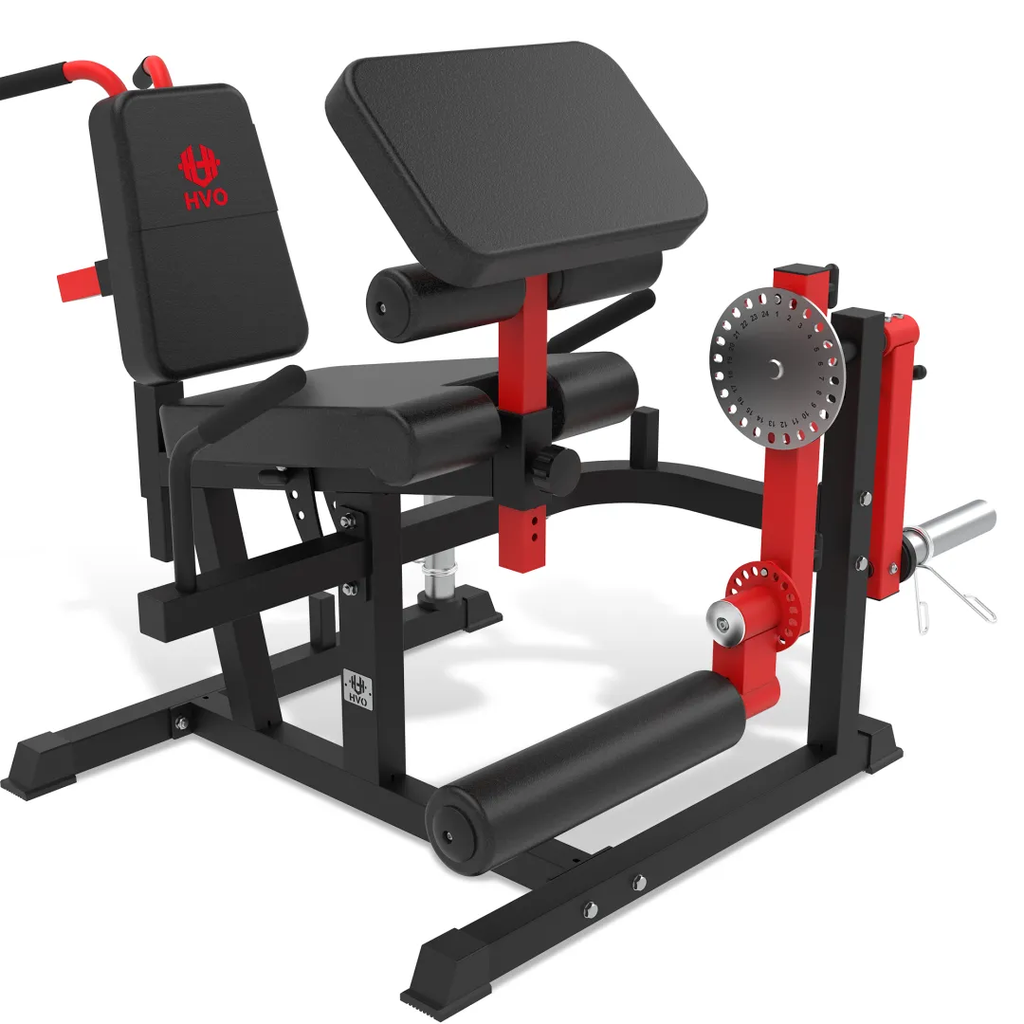
Compact home gyms often need to balance targeted training with limited floor space. A dual-function leg extension and curl machine can add direct quad and hamstring work without requiring two separate strength stations
A compact home gym does not need separate machines for every lower-body movement. The more practical problem is filling a specific training gap without using unnecessary floor space.
For home and garage gym users who already train with squats, deadlifts, or other compound lower-body exercises, direct quad and hamstring isolation is often the missing piece. A dual-function leg extension and curl machine provides a practical way to add both movements without dedicating space to two separate stations.
HVO’s Leg Extension and Curl Machine LC203 offers a useful case for this setup. By combining leg extensions, seated curls, and lying leg curls in one plate-loaded station, it helps illustrate how focused quad and hamstring training can be added within a more compact home-gym layout.
The Training Gap Usually Appears After the Basics
A garage or basement gym commonly starts with a rack, bench, dumbbells, and weight plates.
That setup already supports broad lower-body exercises. Squats train several muscle groups together. Deadlift variations provide another major strength pattern. Lunges and split squats add unilateral work.
What remains less direct is knee-extension and knee-flexion isolation.
Leg extensions place the quadriceps at the center of the movement. Leg curls give the hamstrings a more focused role. Adding both movements becomes useful when the goal is no longer simply “train legs,” but to give individual muscle groups more controlled training volume.
This is where a dual-function leg machine earns its place.
| Existing Home-Gym Setup | Missing Training Need | Practical Addition |
| Rack, barbell, dumbbells | Direct quad work | Leg extension |
| Compound leg exercises | Direct hamstring work | Leg curl |
| Limited permanent floor space | Both movements without two stations | Dual-function extension/curl machine |
The problem is not a lack of exercise options. It is a lack of focused movements that fit the available space.
Two Separate Machines Create a Space Problem
Dedicated strength machines are useful because they give a movement a stable, repeatable setup. The downside is obvious in a home environment: every additional machine takes permanent floor space.
A separate leg-extension station and leg-curl station solve two training needs, but they also create two equipment footprints.
That is difficult to justify in many U.S. single-family homes, especially when the workout area already includes a rack, bench, plate storage, or cardio equipment.
Dual-function equipment changes that equation. The HVO LC203 places extension and curl movements on the same frame. It lists leg extensions, leg curls, and lying leg curls within the same system, rather than requiring a second lower-body station.
For this use case, space efficiency comes from combining related movements, not from trying to make a dedicated machine behave like a foldable accessory.
Focused Training Without Moving to a Large All-in-One Gym
Space-saving equipment is often associated with all-in-one systems, but that is not the only route.
A large multi-gym tries to cover many unrelated movements through one frame. A dual-function machine takes a narrower approach: it combines exercises that serve a closely related training need.
The distinction matters for users who prefer dedicated strength machines.
The HVO LC203 remains centered on guided extension and curl movements. Its listed footprint is approximately 35.43 × 33.46 × 33.07 inches, which keeps it closer to a specialized training station than a large multi-station gym.
That design fits the type of customer HVO identifies in its own project materials: users with an established home, garage, or small private training area who want to add specialized equipment gradually instead of purchasing one oversized system at the beginning.
In that setting, dual-function does not mean “do everything.”
It means give one piece of floor space more than one closely related job.
The Same Station Needs to Work Across Different Exercises
Combining two movements only helps when switching between them remains practical.
The HVO LC203 uses a dial-based adjustment system to move between extension and curl positions without major disassembly. The same frame also supports several body-position settings rather than locking every user into one fixed posture.
This matters for two reasons.
First, extension and curl movements require different leg positions. A dual-function machine needs to accommodate those changes without turning every exercise switch into a long setup process.
Second, home-gym equipment is often shared. Partners or family members do not necessarily use the same seat, backrest, or roller position.
HVO provides a five-position backrest, four seat settings, and five thigh-roller height positions on this machine.
Those adjustments support the actual use case: one station serving different movements and different users while remaining a permanent part of the room.
Existing Weight Plates Keep the Setup Simple
A home gym becomes more complicated when every new machine introduces another resistance system.
Plate-loaded equipment avoids that problem when the household already owns compatible weights.
The HVO LC203 accepts both 1-inch standard plates and 2-inch Olympic plates.
That makes the machine easier to add to an existing strength setup. The same plate collection used elsewhere in the gym can continue to provide progressive resistance for direct leg work.
This also fits a gradual home-gym build. A user can start with free weights and compound movements, then add a dedicated leg station later without replacing the existing loading system.
For a compact gym, compatibility is therefore part of space efficiency. Fewer separate systems mean fewer pieces of equipment and accessories competing for the same room.
Where the HVO LC203 Fits in a Compact Lower-Body Home Gym
The HVO LC203 has a focused role: adding direct quad and hamstring isolation without requiring separate leg-extension and leg-curl machines.
It works best as a targeted addition to an existing lower-body setup rather than as a replacement for every type of leg training.
Best-fit scenarios include:
- Home gyms with basic strength equipment already in place
Racks, benches, dumbbells, and barbells already cover broad compound training.
- Garage or compact home gyms adding focused leg work
One dual-function station adds both extension and curl movements while keeping the number of permanent machines under control.
- Setups where compound lower-body movements are already covered
Squats, deadlifts, lunges, and similar exercises provide general lower-body training, while the LC203 adds more direct quad and hamstring work.
- Shared home gyms that need adjustable positioning
Multiple seat, backrest, and roller settings help different users return to a repeatable setup.
- Plate-based strength setups
Compatibility with standard and Olympic plates allows the machine to fit into an existing loading system.
The HVO LC203 does not replace every lower-body machine. Hip abductor/adductor equipment is still required for direct inner- and outer-thigh isolation, while compound exercises remain important for broader strength development.
For compact home and garage gyms, that makes it a targeted lower-body upgrade which could fills the quad-and-hamstring isolation gap while combining two related movements within one permanent equipment footprint.
FAQ
Why combine leg extensions and curls in one home-gym machine?
The two exercises address complementary lower-body training needs. Combining them reduces the number of dedicated stations required for direct quad and hamstring work.
Does a dual-function machine replace compound leg exercises?
No. It adds focused training rather than replacing squats, deadlifts, lunges, and other compound patterns.
Is this type of equipment suitable for a compact home gym?
Yes, when the home has a permanent workout area. The space advantage comes from putting extension and curl movements on one frame instead of installing two dedicated machines.
Conclusion
Dual-function leg training gives compact home gyms a practical way to add focused lower-body isolation without multiplying the number of dedicated machines. By combining related movements in one station, it helps users expand beyond compound exercises while keeping floor-space use, equipment count, and loading systems under control.
For quad and hamstring training, the main value of a dual-function setup is clear: leg extensions and leg curls can share one permanent footprint, while adjustable positioning supports repeatable use across different exercises and users. Plate-loaded resistance also fits naturally into home gyms that already use weight plates for other strength equipment.
The HVO LC203 provides a useful case for this type of setup. Its combination of leg extension, seated and lying leg curl functions, together with multiple body-position adjustments, shows how one plate-loaded station can support more targeted quad and hamstring training without requiring separate machines for each movement.